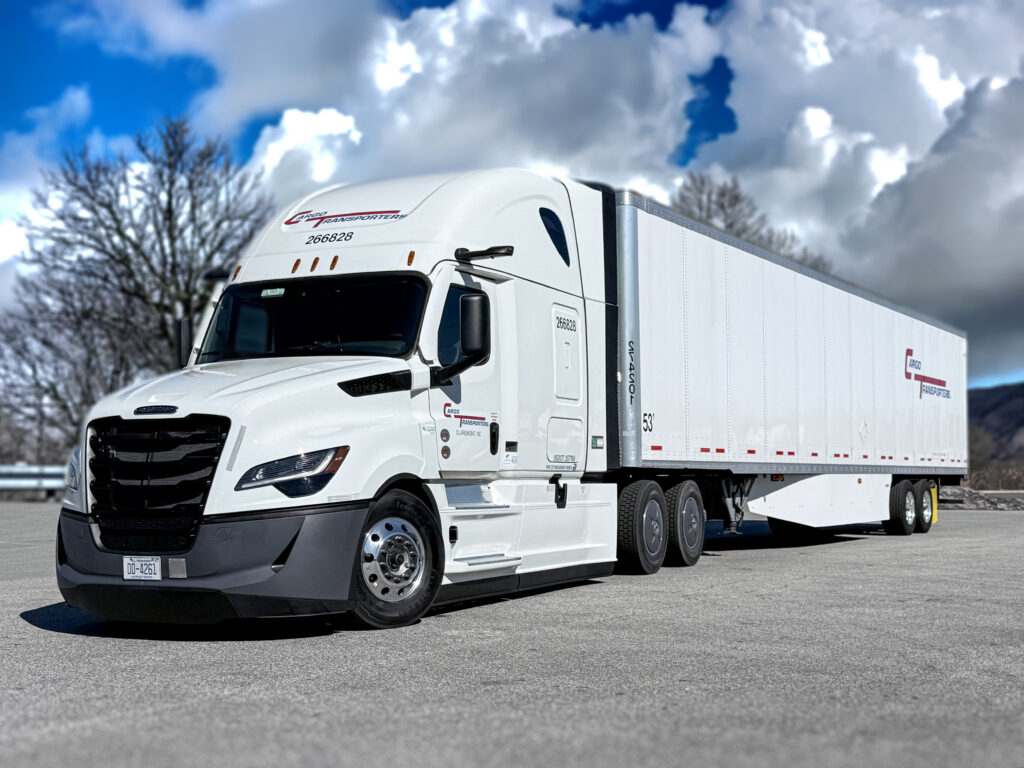
When most people picture tractor-trailers, they likely imagine them traveling along major highways and interstates. However, many of the businesses and communities served by the trucking industry are located miles from the nearest freeway. Reaching them requires CDL-A licensed drivers to travel through small towns and along rural two-lane roads with one lane in each direction.
As students return to school, those roads become busier. School buses rejoin morning and afternoon routes, families adjust to new schedules, and newly licensed teen drivers begin making the trip to school on their own.
Unlike divided highways, rural two-lane roads provide little separation between vehicles traveling in opposite directions. Hills, curves, narrow shoulders, driveways, and limited passing areas can also reduce the time drivers have to respond. With trucks, buses, and passenger vehicles sharing the same roads, patience and awareness are especially important.
Leave Space Behind Large Trucks
Following a tractor-trailer too closely limits your view of the road ahead. From behind the trailer, you may not be able to see an approaching curve, slowing traffic, a school bus, or a vehicle waiting to turn.
On trucks equipped with conventional mirrors, a familiar rule is that if you cannot see the truck’s side mirrors, you should assume its driver cannot see you. Many Cargo Transporters trucks are equipped with Stoneridge’s MirrorEye® Camera Monitor System, which uses cameras and in-cab monitors to provide an expanded field of view and reduce blind spots.
Even with modern visibility technology, leaving adequate space remains essential. Staying far enough behind a truck to see its mirrors or camera system is a helpful reminder that you are not tucked closely behind the trailer, but motorists should allow additional following distance based on their speed, visibility, weather, and road conditions.
Give Trucks Room to Turn
Wide turns can create more confusion than many motorists realize, particularly on narrow rural roads and at smaller intersections.
A tractor-trailer may need to slow significantly, move within its lane, or use additional roadway space to complete a turn. The driver will provide clear indications of the truck’s intended movement, so pay close attention to turn signals, brake lights, the truck’s position, and the direction of its front wheels before attempting to maneuver around it.
Never try to squeeze between a turning truck and the shoulder, curb, driveway, or road beside it. A vehicle that moves alongside a truck on the right can become trapped as the trailer follows the tractor through the turn.
The safest choice is to stay back, allow the truck to complete its turn, and continue once the roadway is clear.
When School Buses Join the Route
The beginning of the school year brings frequent stops back to rural roads. A school bus may stop near a driveway, intersection, or other location where motorists are not accustomed to seeing traffic come to a halt.
Leave additional space when following a bus and begin slowing as soon as its warning lights activate. Never pass a stopped school bus when its red lights are flashing and its stop arm is extended. On a two-lane road with one lane in each direction, traffic approaching from either direction should be prepared to stop.
Drivers should also watch for children near driveways, mailboxes, and pickup locations. A child may need to cross the road and may not always be visible before the bus stops.
Sharing the Road with New Teen Drivers
Back-to-school season also brings newly licensed teen drivers into morning traffic. Driving to school is an exciting step toward independence, but learning a new route and routine can understandably feel overwhelming.
More experienced motorists can help by remaining patient, providing space, and avoiding aggressive driving when someone is traveling cautiously.
Teen drivers should leave extra time for the trip, put away distractions before moving, and avoid allowing an impatient vehicle behind them to influence their decisions.
Patience Makes the Difference
The start of the school year changes the rhythm of rural roads. Trucks continue traveling beyond the interstate to serve local businesses and communities, while school buses and student drivers become part of the daily routine again.
Everyone has somewhere to be, but arriving safely matters more than saving a few minutes. Leaving room, paying attention, and showing patience can help make the back-to-school transition safer for every driver and passenger sharing the road.